After a power outage, solar can come back at a fraction of its output and nobody notices. Here's how to check yours in 5 minutes.
Most homeowners know what to do when the power goes out: wait, check on the neighbors, reset the clocks. What almost nobody checks is whether their solar came back on, too.
Usually it does. Solar systems are built to shut off when the grid goes down and restart on their own a few minutes after power returns. But "usually" isn't "always." Sometimes part of a system restarts and part of it doesn't. The panels look the same from the street, the lights work, and the app may still show some production. The loss stays hidden until a bill, or a sharp-eyed homeowner, catches it.
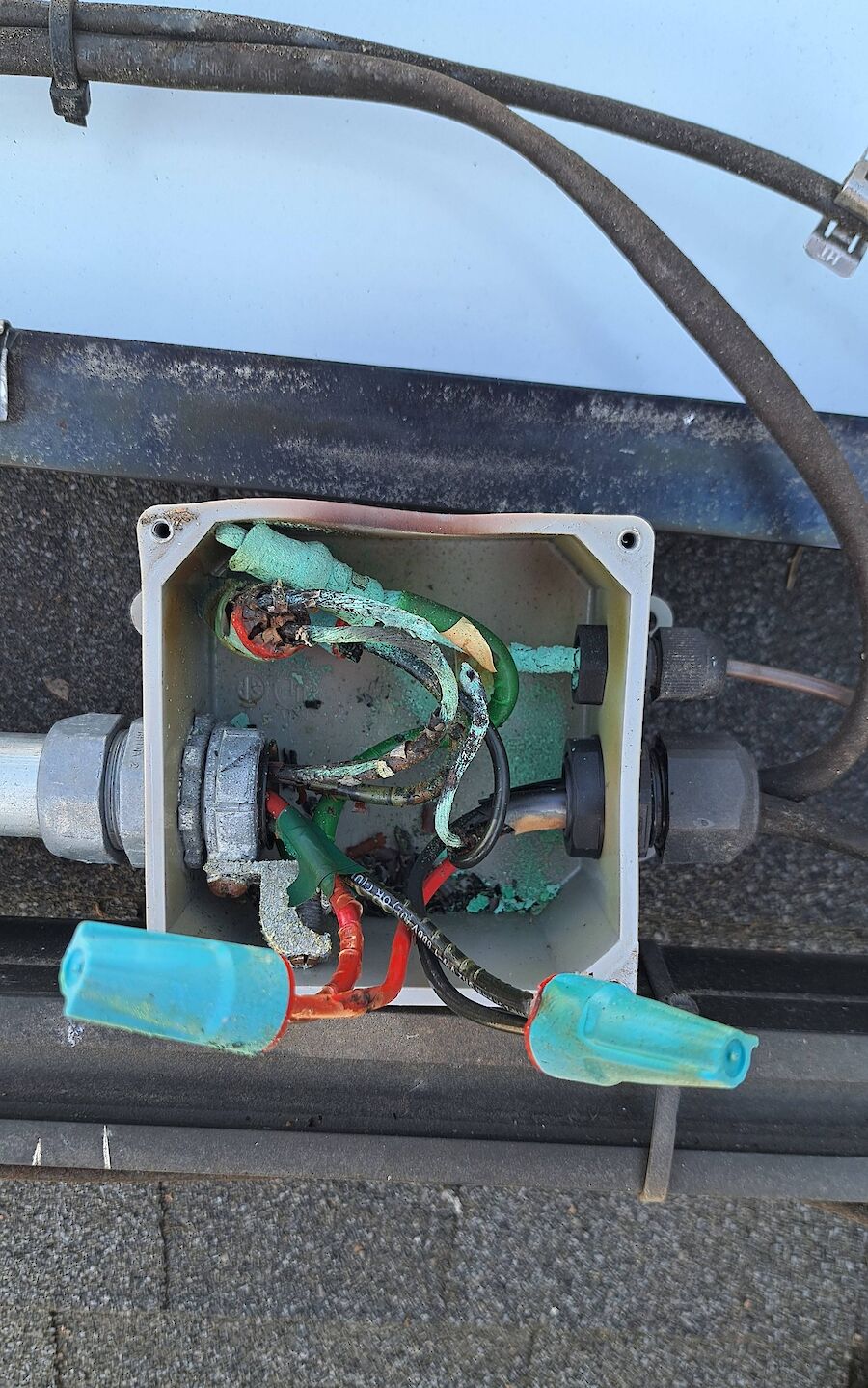
This summer a Hastings-on-Hudson home lost power for about 40 hours over July 4–6. When the power came back, the solar array came back too, but only partly. Peak output dropped from about 5.5 kW to 1.6 kW. Nothing looked wrong from the ground, and the homeowners only found out weeks later, when we went through a year of their Con Edison meter data. By then it had been running that way for 55 days.
The system's older monitoring only showed totals, not individual panels, so there was no way to see what had stopped. We installed a new combiner panel and Enphase monitoring. With panel-level data, the problem was obvious: one whole string of panels wasn't producing. On the roof we found a burnt, shorted wire in the junction box. We replaced the wiring from the roof down to the combiner, and the whole system is producing again.
The lesson isn't that every outage breaks something. It's that a partial loss can hide for months if nobody compares the numbers.
Grid-tied solar is required to stop sending power to the lines during an outage, so utility crews working on them stay safe. When power comes back, the inverters wait, check that the grid is stable, and restart.
Most of the time that's seamless. But an outage, and especially the surges and flickers when power is restored, can trip a breaker, knock a gateway offline, or leave some equipment that needs a manual reset. If only part of the system restarts, you'll still see some production, which is exactly why it's easy to miss.
Do this the first sunny day after any outage that lasted more than a few minutes.
Con Edison customers with a smart meter can download up to a year of their own usage data through Green Button "Download My Data" in their online account (Account & Billing → Energy Use → Green Button). It comes as a spreadsheet.
You don't need to be a data expert. Compare the weeks before and after an outage. If your home suddenly started pulling noticeably more power from the grid on sunny afternoons and nothing else changed (no new heat pump, no guests, no EV), your solar may not be fully back.
Winter storms bring more outages, and shorter days make any production loss harder to spot. A system that's running at half power in December can look "normal" simply because December numbers are always low. That's why the comparison matters: check a clear day against a clear day, not against summer.
It also helps to keep a simple habit. After any outage, add a reminder to your phone for the next sunny day: "check solar." Two minutes in the app is enough. If you have a battery, check that it's back to its normal mode and charging, too. And if you've had work done on your electrical panel, a new generator hookup or a new router since your last check, mention it when you call. Those details often point straight to the cause.
Rivertown Solar's in-house crew and licensed electricians service systems across Westchester and the Bronx, including systems we didn't install. Call (914) 231-6866 or send us a support request.
Related reading